


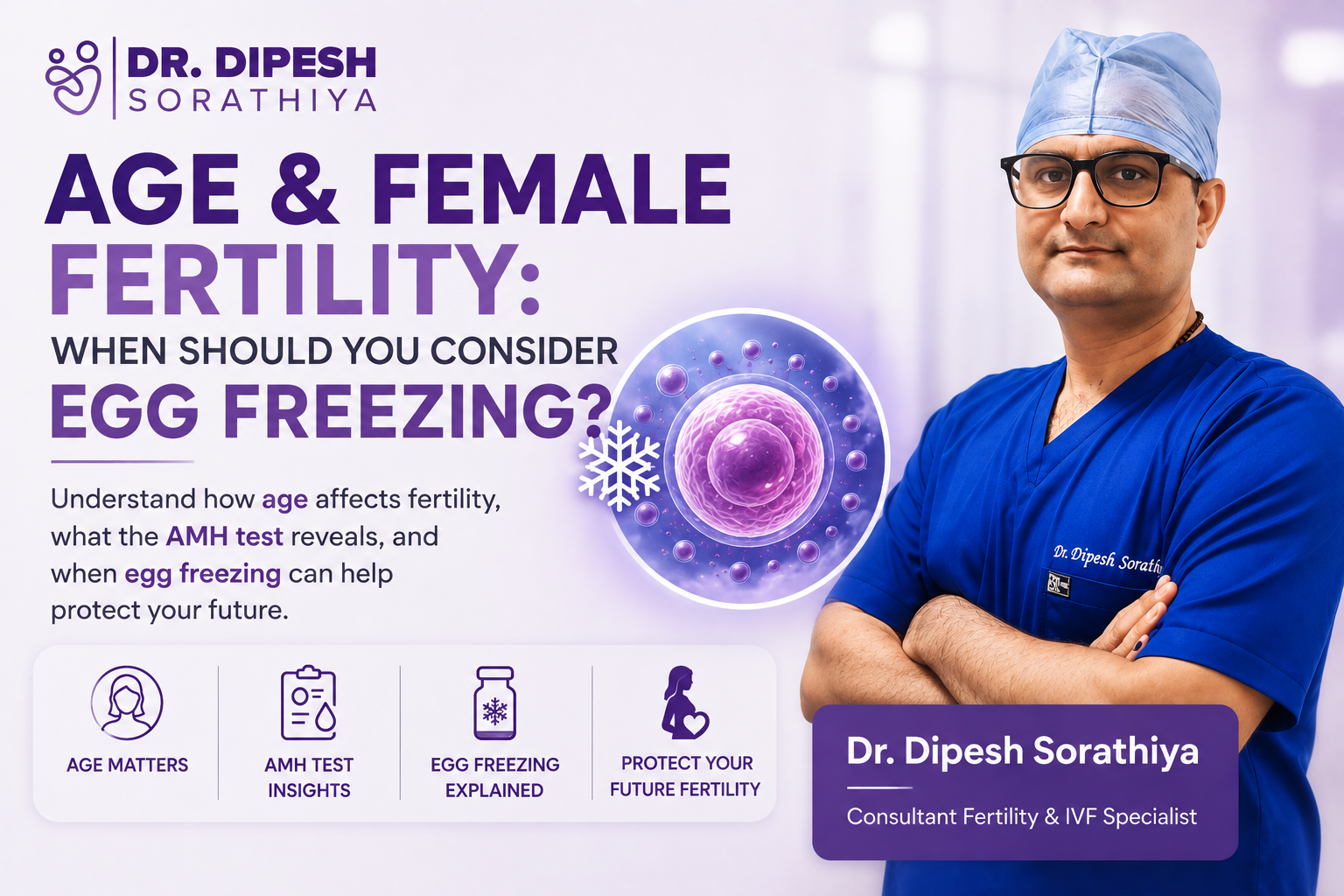
Although it may be difficult to hear, it is a biological reality that time plays a significant role in female fertility. While men continue to produce new sperm throughout their lives, women are born with a limited number of eggs that gradually decline in both quantity and quality with age. This is not a reason to feel anxious, but rather an opportunity to make informed decisions about your reproductive health at the right time.
How Does Female Fertility Change with Age?
| Age | Fertility Status |
|---|---|
| 20 to 30 years | Peak fertility years with the highest chances of natural conception. |
| 30 to 35 years | Fertility gradually begins to decline. |
| 35 to 40 years | A more noticeable decline in both egg quantity and egg quality. |
| After 40 years | The chances of natural pregnancy decrease significantly. |
As women age, the risk of miscarriage and chromosomal abnormalities in embryos also increases. This is a natural biological process and should not be viewed as anyone's fault. Understanding these changes can help women make informed decisions about their reproductive health.
What Does the AMH Test Reveal?
The AMH (Anti-Müllerian Hormone) test is a blood test that helps estimate a woman's ovarian reserve, or the number of eggs remaining in her ovaries. A higher AMH level generally indicates a larger egg reserve, while a lower AMH level suggests fewer remaining eggs. However, it is important to understand that AMH reflects the quantity of eggs, not their quality. Egg quality is primarily influenced by age, which is why age remains an important factor even when AMH levels are normal.
What Is Egg Freezing and Who Should Consider It?
Egg freezing is a fertility preservation procedure in which mature eggs are collected from the ovaries and rapidly frozen using an advanced technique called vitrification. The frozen eggs can be stored for future use when a woman decides to plan her pregnancy. While egg freezing does not guarantee a successful pregnancy, it allows women to preserve their younger, healthier eggs, potentially improving future reproductive options.
Egg freezing may be recommended for:
- Women who wish to delay pregnancy due to career goals, education, or personal reasons.
- Women undergoing cancer treatments such as chemotherapy or radiation that may affect fertility (Oncofertility).
- Women diagnosed with endometriosis or those with a declining ovarian reserve who wish to preserve their fertility for the future.
What Is the Best Age for Egg Freezing?
The general principle is simple: the earlier, the better. Eggs collected at a younger age are typically healthier and of better quality, offering greater potential for future pregnancy. In general, women between the ages of 30 and 35 are considered ideal candidates for egg freezing, although the right timing varies depending on individual circumstances. Under India's Assisted Reproductive Technology (ART) Act, 2021, there are specific regulations governing egg freezing and fertility preservation. Your fertility specialist can guide you through the eligibility criteria and the complete process.
Want to Know Your Fertility Status?
A simple AMH blood test and a pelvic ultrasound can provide valuable insights into your ovarian reserve and overall fertility health. Consult Dr. Dipesh Sorathiya at Khushhi IVF, Thaltej to understand your fertility potential and explore the treatment options best suited to your future family planning goals.
Book an Appointment Learn About Our ClinicFrequently Asked Questions
Is natural pregnancy impossible after the age of 35?
No. Many women conceive naturally after the age of 35. However, fertility gradually declines with age, making timely fertility evaluation and planning increasingly important.
Does a low AMH level mean I cannot get pregnant?
Not at all. A low AMH level indicates a reduced ovarian reserve, but it does not mean pregnancy is impossible. Even a single healthy egg can result in a successful pregnancy. The AMH test primarily helps fertility specialists plan the most appropriate treatment strategy.
How long can frozen eggs be stored?
When preserved using modern vitrification techniques, frozen eggs can be safely stored for many years under appropriate laboratory conditions. When you decide to conceive, the eggs are thawed and can be used for IVF or ICSI treatment.
Does egg freezing guarantee pregnancy?
No. Egg freezing is a fertility preservation method that improves future reproductive options, but it cannot guarantee pregnancy. Success depends on several factors, including the woman's age at the time of freezing, the number of eggs preserved, their quality, and overall reproductive health.
