


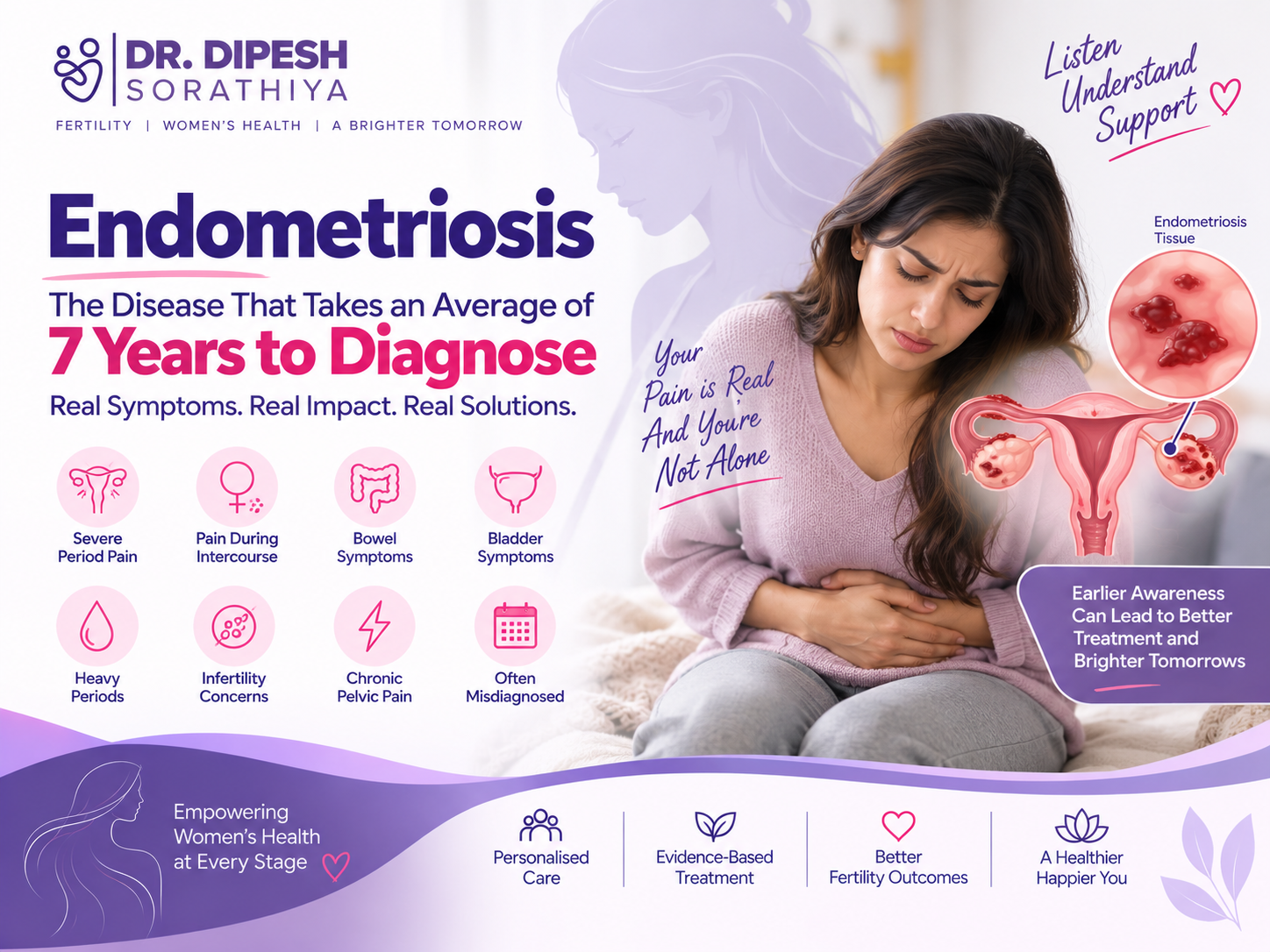
Every month, this displaced tissue behaves like the uterine lining: it thickens, breaks down, and tries to shed. But unlike the uterine lining, it has nowhere to go. It becomes trapped, causes inflammation, and over time creates scar tissue and adhesions that bind organs together.
Why does diagnosis take so long? Several reasons. Pain during periods is often dismissed as "normal." The symptoms overlap with conditions like IBS, pelvic inflammatory disease, and fibroids. And critically — endometriosis can only be definitively confirmed by laparoscopy, a surgical procedure. Ultrasound misses most forms except ovarian cysts.
The Symptoms — When Period Pain Is More Than Period Pain
Painful periods are the most common symptom, but not all painful periods mean endometriosis, and not all endometriosis causes pain. Here's what to look for:
Dysmenorrhoea (Painful Periods)
Pain that starts before the period and lasts through it — often severe enough to prevent normal activity, require strong painkillers, or cause vomiting.
Dyspareunia (Pain During Intercourse)
Pain during or after sex — particularly with deep penetration. Often worse during certain times of the cycle.
Dyschezia (Pain During Bowel Movements)
Pain when passing stools, particularly during menstruation — caused by endometriosis on the bowel or rectum.
Dysuria (Pain During Urination)
In cases where endometriosis affects the bladder.
Chronic Pelvic Pain
A constant, dull ache in the lower abdomen or pelvis — present outside of periods.
Heavy Periods
Some women with endometriosis have heavy menstrual bleeding or spotting between periods.
Infertility
Endometriosis is found in 20–40% of women undergoing fertility investigations — making it one of the most common identifiable causes of female infertility.
Important: Some women with stage III or IV endometriosis have minimal pain. Others with minimal disease have severe symptoms. The stage doesn't always predict the experience.
How Endometriosis Affects Fertility
Endometriosis damages fertility through multiple pathways:
- Structural damage: Endometriotic deposits cause inflammation and scarring. When the fallopian tubes are affected, they can be blocked or distorted. When the ovaries are affected, endometriomas (chocolate cysts filled with old blood) form — and these cysts damage the healthy ovarian tissue surrounding them, reducing ovarian reserve.
- Inflammatory environment: The pelvic fluid in women with endometriosis contains elevated levels of inflammatory molecules that are toxic to eggs and may impair fertilisation.
- Impaired egg quality: The inflammatory environment of endometriosis — particularly severe disease — appears to reduce the developmental potential of eggs.
- Reduced endometrial receptivity: The uterine lining in women with endometriosis may be biochemically less welcoming to a developing embryo, even when it appears normal on ultrasound.
- Adhesions: In advanced disease, adhesions can fix the ovaries in abnormal positions, wrap around tubes, and completely distort pelvic anatomy.
Diagnosis — How Endometriosis Is Confirmed
| Method | What It Shows |
|---|---|
| Laparoscopy | The gold standard. A camera introduced into the pelvis under general anaesthesia allows direct visualisation of deposits, adhesions, and ovarian cysts. Biopsy confirms the tissue type. |
| Transvaginal ultrasound | Can detect endometriomas (ovarian chocolate cysts) but misses peritoneal deposits, deep infiltrating endometriosis on the bowel, and superficial implants. |
| MRI | Useful for mapping deep infiltrating endometriosis — particularly when bowel or bladder involvement is suspected. |
| Blood test (CA-125) | Elevated in some women with endometriosis but not specific enough for diagnosis on its own. |
A clinical diagnosis based on symptoms and ultrasound findings can justify starting treatment in some cases — definitive laparoscopic confirmation is essential before major surgical decisions.
Stages of Endometriosis
The American Society for Reproductive Medicine (ASRM) classifies endometriosis into four stages (I through IV) based on the location, extent, and depth of deposits, and the degree of adhesions. Stage IV is the most severe — but as noted, stage doesn't always correlate with symptom severity or fertility impact.
Severe Period Pain Deserves an Answer, Not Dismissal
If pain is disrupting your life or you're struggling to conceive, endometriosis is worth investigating properly. Consult Dr. Dipesh Sorathiya at Khushhi IVF, Thaltej, Ahmedabad for assessment and a treatment plan built around your goals.
Book an Appointment Learn About the ClinicTreatment Options — By Goal
For Pain Management
- NSAIDs (ibuprofen, naproxen) — first-line for period pain
- Combined oral contraceptive pills — suppress periods and reduce pain
- Progestins (norethisterone, dienogest) — suppress endometriosis
- GnRH agonists (e.g. Leuprolide) — induce a temporary menopause-like state, shrinking deposits; used short-term
- Mirena (hormonal IUD) — reduces bleeding and pain
For Fertility
- Mild endometriosis: Laparoscopic excision or ablation of deposits can improve natural conception rates and IUI success
- Endometriomas: Surgical removal (cystectomy) may be appropriate — but must be weighed against the risk of reducing ovarian reserve
- Moderate-severe endometriosis: IVF is the most effective fertility treatment; it bypasses the damaged tubes and pelvic environment entirely
- ERA (Endometrial Receptivity Analysis): For women with endometriosis who have had IVF failures — helps identify the optimal timing for embryo transfer when the implantation window may be shifted
Frequently Asked Questions
Can I get pregnant naturally with endometriosis?
Yes — many women with mild to moderate endometriosis conceive naturally. The likelihood depends on stage, location, ovarian reserve, and partner's sperm quality.
Does endometriosis come back after surgery?
Yes — endometriosis can recur after surgery. Recurrence rates for endometriomas after cystectomy are 15–30% over 5 years. Medical management between surgeries helps slow recurrence.
Will IVF work with endometriosis?
IVF success rates are somewhat lower in severe endometriosis compared to other causes, but many women with endometriosis have successful IVF outcomes. The key is careful stimulation and optimising the uterine environment.
Should I have surgery before IVF if I have an endometrioma?
Not always. For women with limited ovarian reserve, operating on the ovary risks further loss of follicles. The decision must balance the potential benefits of surgery against the risk of reducing your egg supply. This is a nuanced, individual decision — not one-size-fits-all.
Khushhi IVF 5th Floor, Soham Pristine, Off Sindhubhavan Road, Thaltej, Ahmedabad, Gujarat 380054, India.
