


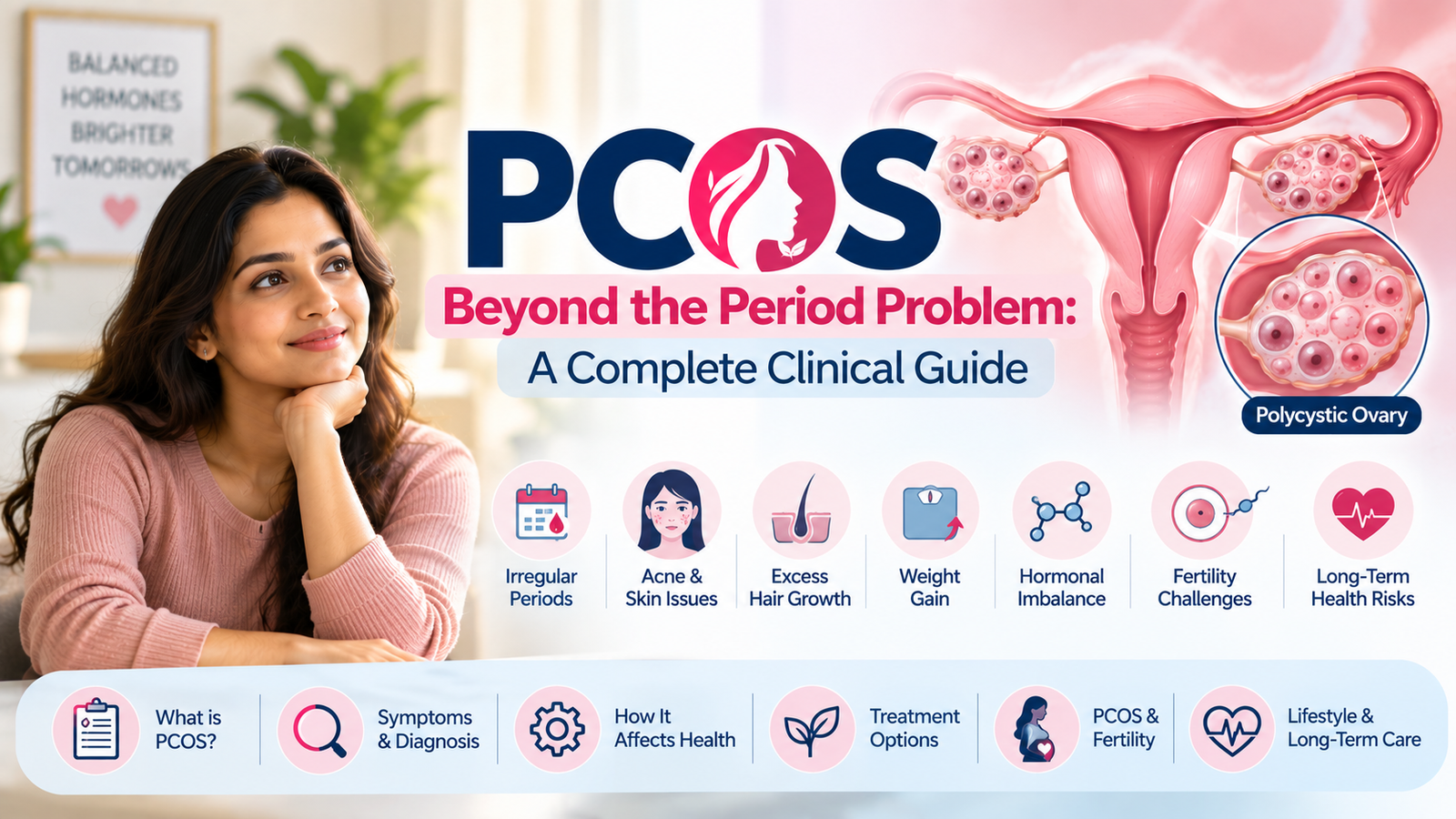
Understanding PCOS as a systemic condition — not just a gynaecological one — changes how you think about managing it. It affects the skin, hair, weight, mood, metabolism, cardiovascular system, and long-term cancer risk. Managing it well means addressing all of these dimensions, not just trying to regulate the period.
The Rotterdam Criteria — How PCOS Is Properly Diagnosed
A diagnosis of PCOS requires at least two of the following three:
| Criterion | What It Means |
|---|---|
| Irregular or absent ovulation | Evidenced by irregular or infrequent periods (fewer than 8 per year, or cycles longer than 35 days) |
| Biochemical or clinical hyperandrogenism | Elevated testosterone, DHEAS, or free androgen index on blood tests, OR clinical signs (hirsutism, acne, androgenic alopecia) |
| Polycystic ovarian morphology | 12 or more follicles of 2–9mm diameter in at least one ovary on ultrasound, or increased ovarian volume |
Other conditions must be excluded first: thyroid disease, hyperprolactinaemia, congenital adrenal hyperplasia, androgen-secreting tumours.
The Insulin Resistance Connection — The Root Most Treatments Target
Approximately 70–80% of women with PCOS have some degree of insulin resistance — even those with a normal body weight. When cells don't respond adequately to insulin, the pancreas compensates by producing more. Elevated insulin then directly stimulates the ovarian theca cells to produce more androgens — which suppresses normal follicular development and disrupts ovulation.
This is why:
- Lifestyle interventions (reducing glycaemic load, increasing physical activity) directly improve PCOS
- Metformin (an insulin sensitiser) is one of the most widely used PCOS medications
- Weight loss — even 5% — can restore ovulation in many overweight women with PCOS
Fertility Treatment — The Step-by-Step Pathway
For women with PCOS who want to conceive:
Step 1: Lifestyle Optimisation (3–6 months)
Low glycaemic index diet, regular moderate exercise, smoking cessation, alcohol reduction. For overweight women, this is the single most effective intervention.
Step 2: Letrozole (Ovulation Induction) + Timed Intercourse + Monitoring
Letrozole is the current first-line pharmacological ovulation induction agent in PCOS (having replaced Clomiphene in most guidelines). Used with follicle tracking ultrasound to confirm ovulation timing. Up to 6 cycles are reasonable.
Step 3: IUI with Gonadotropin Stimulation
Adds intrauterine insemination to stimulated ovulation. Appropriate when tubes are open and sperm is adequate. 3–4 cycles before reassessing.
Step 4: IVF
PCOS women generally produce large numbers of eggs in IVF — which is both an advantage (more embryos) and a challenge (higher OHSS risk). The "freeze-all" strategy — freezing all embryos and transferring in a subsequent cycle — is standard for PCOS patients, both to reduce OHSS risk and to optimise the uterine environment for implantation.
PCOS Is Manageable — With the Right Plan
Whether your goal is regular cycles, symptom control, pregnancy, or protecting your long-term metabolic health, treatment should address all of it. Consult Dr. Dipesh Sorathiya at Khushhi IVF, Thaltej, Ahmedabad.
Book an Appointment Learn About the ClinicLong-Term Health Risks of PCOS — Often Overlooked
PCOS is a lifelong condition that extends well beyond the reproductive years:
Type 2 Diabetes
Women with PCOS have a 4–8 times higher lifetime risk of type 2 diabetes. Insulin resistance, if unaddressed, progresses to glucose intolerance and diabetes.
Cardiovascular Disease
PCOS is associated with adverse lipid profiles, hypertension, and chronic inflammation — all cardiovascular risk factors.
Endometrial Cancer
Irregular periods mean the uterine lining is not shed regularly. Years of unstimulated endometrial growth without progesterone-driven shedding raises the risk of endometrial hyperplasia and cancer. Regular monitoring and ensuring at least 4 periods per year (through medication if needed) significantly reduces this risk.
Obstructive Sleep Apnoea
5–10 times more common in women with PCOS than age-matched controls.
Psychological Health
Anxiety and depression are significantly more common in PCOS — both through direct hormonal mechanisms and through the visible, distressing symptoms the condition produces.
Frequently Asked Questions
Is PCOS hereditary?
Yes — strongly so. If your mother, sister, or close female relatives have PCOS, irregular periods, or type 2 diabetes, your risk is substantially higher.
Can thin women have PCOS?
Absolutely. About 20% of PCOS women have a normal BMI — so-called "lean PCOS." The hormonal and metabolic abnormalities are often present even without weight gain.
Does PCOS improve after menopause?
In many women, yes — hormonal symptoms like irregular periods and hirsutism improve after menopause. But the metabolic risks (diabetes, cardiovascular disease) continue and need lifelong monitoring.
What is the best diet for PCOS?
A low-glycaemic index diet that limits refined carbohydrates, sugar, and processed foods while emphasising whole grains, vegetables, legumes, and protein. The Mediterranean diet pattern has good evidence in PCOS.
Khushhi IVF 5th Floor, Soham Pristine, Off Sindhubhavan Road, Thaltej, Ahmedabad, Gujarat 380054, India.
