


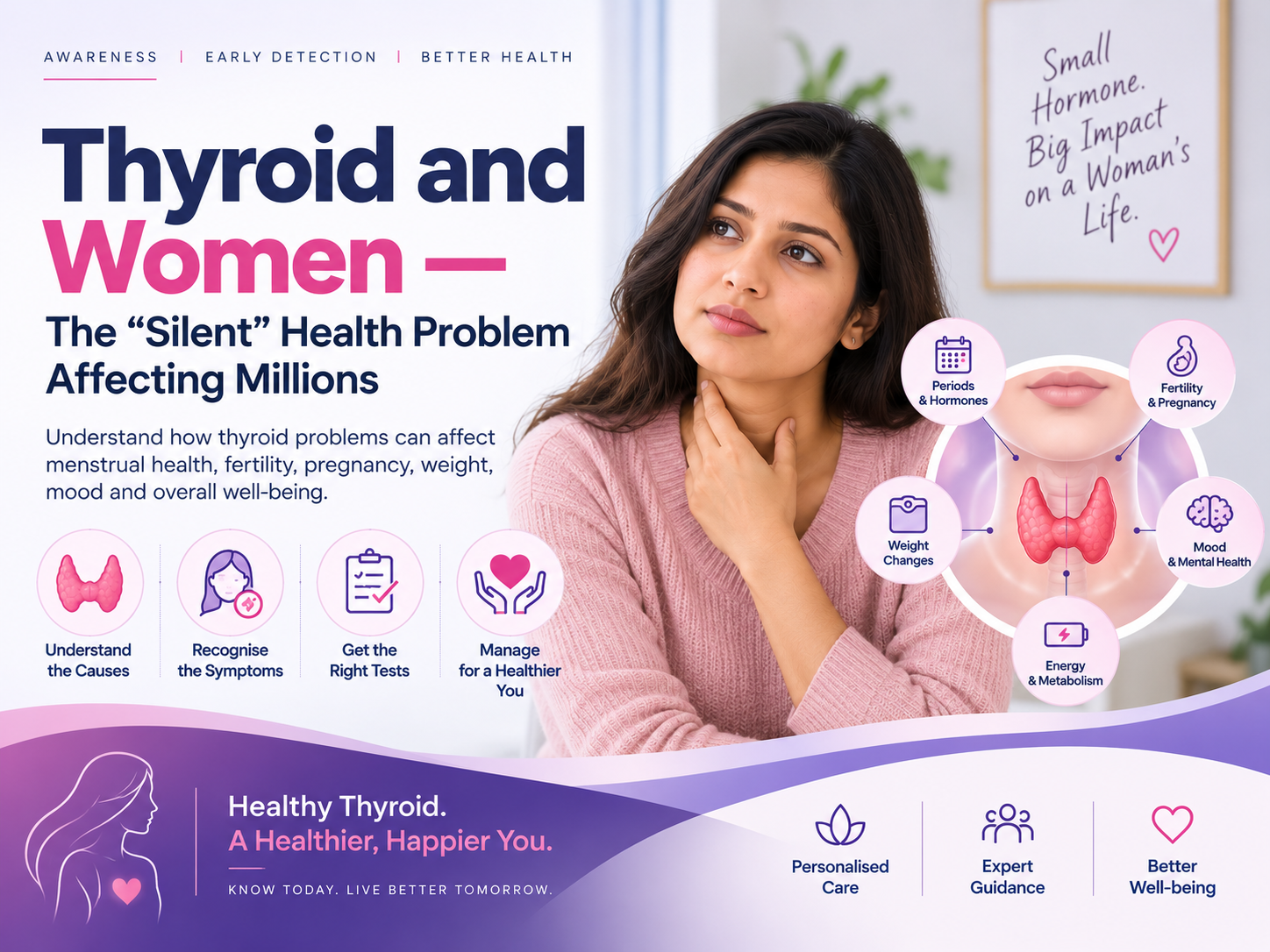
The thyroid gland — a butterfly-shaped structure at the front of the neck — controls metabolism, energy levels, heart rate, body temperature, mood, and much more. When it goes wrong, the effects ripple through virtually every system in the body.
Two Types of Thyroid Problem
Hypothyroidism (Underactive Thyroid)
The thyroid produces too little hormone — the body slows down.
Symptoms:
- Persistent fatigue and weakness — rest doesn't help
- Feeling cold all the time
- Weight gain despite controlled diet
- Low mood, depression, lack of motivation
- Constipation
- Dry skin, hair fall, brittle nails
- Heavy, irregular, or painful periods
- Puffiness of the face, hands, and feet
- Poor memory and difficulty concentrating
Hyperthyroidism (Overactive Thyroid)
The thyroid produces too much hormone — the body goes into overdrive.
Symptoms:
- Nervousness, anxiety, and restlessness
- Rapid heartbeat (palpitations)
- Weight loss despite eating well
- Heat intolerance — feeling excessively warm
- Hand tremors
- Loose stools or diarrhoea
- Light, infrequent, or missed periods
How Thyroid Affects Women Specifically
Thyroid hormones are deeply connected to female reproductive hormones like oestrogen and progesterone. When thyroid function is off, the entire hormonal system feels the impact.
Effect on Periods
- Hypothyroidism: Heavy, painful, irregular periods
- Hyperthyroidism: Light, infrequent, or absent periods
Effect on Fertility
- Thyroid imbalance disrupts ovulation
- Hypothyroidism elevates prolactin, which blocks ovulation entirely
- Untreated thyroid disease significantly raises the risk of miscarriage
Effect on Pregnancy
- During pregnancy, the TSH target is stricter — ideally below 2.5 mIU/L (compared to the normal non-pregnant range of up to 4.0)
- Untreated thyroid disease in pregnancy increases risks of preterm birth, impaired fetal brain development, and miscarriage
Effect on Menopause
Hypothyroid symptoms (fatigue, weight gain, low mood) overlap extensively with menopause symptoms — leading many women to be misdiagnosed or to have their thyroid problem undetected during this transition.
Diagnosis — Which Tests?
TSH (Thyroid Stimulating Hormone) is the primary first test:
| TSH Level | Meaning |
|---|---|
| 0.4 – 4.0 mIU/L | Normal |
| Above 4.0 | Hypothyroidism (underactive) |
| Below 0.4 | Hyperthyroidism (overactive) |
Additional tests as needed:
- Free T3 and Free T4 — actual thyroid hormone levels
- Anti-TPO antibodies — autoimmune thyroid disease (Hashimoto's)
- TSH receptor antibodies — Graves' disease (autoimmune hyperthyroidism)
- Thyroid ultrasound — gland size, nodules
When to test:
- When symptoms are present
- Before planning a pregnancy — a pre-conception thyroid check is essential
- When irregular periods coincide with hair loss and weight changes
- When there is a family history of thyroid disease
Get Your Thyroid Checked Before It Affects More Than You Think
Thyroid imbalance can quietly affect your periods, fertility, and pregnancy. Consult Dr. Dipesh Sorathiya at Khushhi IVF, Thaltej, Ahmedabad for the right tests and a treatment plan suited to your situation.
Book an Appointment Learn About the ClinicTreatment
Hypothyroidism
- Levothyroxine (T4 tablet) — taken daily on an empty stomach, at least 4 hours apart from other medications
- Dose is adjusted regularly based on TSH blood tests
- In pregnancy, the dose typically needs to increase — strict monitoring required
Hyperthyroidism
- Antithyroid drugs (carbimazole or propylthiouracil)
- Radioactive iodine
- Thyroidectomy (surgical removal) — in severe cases
Lifestyle Support
- Selenium-rich foods — Brazil nuts, sunflower seeds, eggs
- Balanced iodine intake — too little and too much are both harmful; iodized salt in moderate amounts
- Stress management — chronic stress worsens autoimmune thyroid conditions
- Some women with autoimmune thyroid benefit from reducing gluten — discuss with your doctor
Frequently Asked Questions
Is the thyroid tablet lifelong?
For hypothyroidism, in most cases yes — though the dose is adjusted over time. For hyperthyroidism, some patients achieve remission; others need long-term management.
Can I get pregnant if I have thyroid disease?
Absolutely — with well-controlled thyroid levels and appropriate monitoring, healthy pregnancy is very achievable.
Should I check my thyroid before trying to conceive?
Yes. Ideally TSH should be below 2.5 before conception. Pre-conception thyroid screening is one of the most important steps you can take before trying for a pregnancy.
Do thyroid medications have side effects?
At the correct dose, side effects are minimal. Too high a dose can cause palpitations and anxiety; too low leaves symptoms unresolved. Regular TSH monitoring keeps the dose right.
Khushhi IVF 5th Floor, Soham Pristine, Off Sindhubhavan Road, Thaltej, Ahmedabad, Gujarat 380054, India.
