


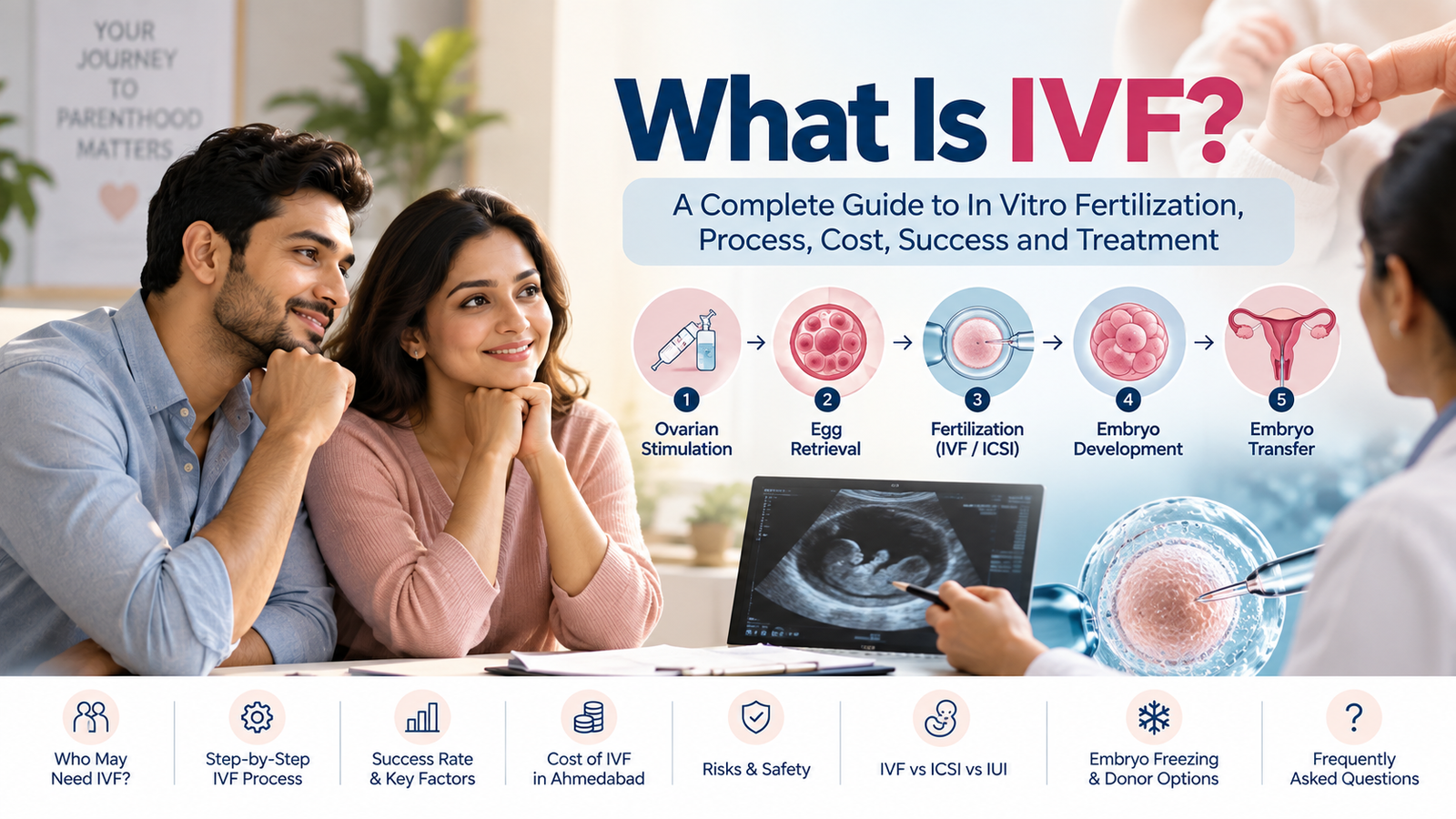
IVF is one of several treatments used in reproductive medicine. It may be considered when pregnancy has not occurred because of factors involving the fallopian tubes, ovulation, sperm, endometriosis, age-related fertility changes, unexplained infertility or other reproductive conditions.
However, IVF is not automatically the right treatment for every couple. The appropriate approach depends on the individual's fertility assessment, age, medical history, diagnosis and reproductive goals. The World Health Organization recognizes IVF as one of the established forms of medically assisted reproduction used in infertility care.
How Does IVF Work?
An IVF cycle involves several stages. Although treatment protocols vary between patients, the process generally includes:
- Fertility assessment and treatment planning
- Ovarian stimulation
- Monitoring follicular development
- Egg retrieval
- Fertilization in the laboratory
- Embryo development
- Embryo transfer or embryo freezing
- Pregnancy testing and follow-up
Not every IVF cycle looks exactly the same. Some patients may have a fresh embryo transfer, while others may have embryos frozen for transfer during a later cycle.
Step 1: Fertility Assessment Before IVF
Before starting IVF treatment, a fertility specialist generally evaluates the couple or individual to understand the factors that may affect treatment. Depending on the situation, the assessment may include:
- Medical and reproductive history
- Menstrual-cycle history
- Ovulation assessment
- Ovarian reserve assessment
- AMH testing
- Antral follicle count
- Pelvic ultrasound
- Assessment of the uterus and fallopian tubes
- Semen analysis
- Review of previous fertility treatments
When a male partner contributes sperm, both partners should generally be evaluated rather than assuming that infertility is caused by the woman. ASRM recommends evaluating both partners in parallel when appropriate.
Step 2: Ovarian Stimulation
During IVF, medications are commonly used to stimulate the ovaries so that multiple follicles can develop during one treatment cycle. The exact medication protocol varies according to factors such as age, ovarian reserve, previous response to fertility treatment, antral follicle count, medical history and previous IVF cycles.
The goal is not simply to produce as many eggs as possible. The treatment plan should aim for an appropriate ovarian response while considering patient safety. During stimulation, ultrasound examinations and, when appropriate, blood tests are used to monitor the response.
Step 3: Egg Retrieval
When the follicles have developed appropriately, a medication is given to help final egg maturation. Egg retrieval is then performed using ultrasound guidance.
The procedure involves collecting eggs from the ovaries with a specialized needle. Sedation or anaesthesia may be used depending on the clinical setting and the patient's circumstances. After retrieval, the eggs are taken to the embryology laboratory for assessment.
Step 4: Fertilization
The retrieved eggs can be fertilized with sperm in the laboratory. There are two commonly discussed fertilization approaches:
- Conventional IVF: Eggs and sperm are placed together in laboratory conditions to allow fertilization to occur.
- ICSI: Intracytoplasmic sperm injection involves injecting a single sperm directly into an egg. ICSI can be particularly relevant in certain cases of male-factor infertility or previous fertilization problems.
Importantly, ICSI is not automatically required for every IVF cycle. The decision depends on the patient's circumstances and treatment plan.
Step 5: Embryo Development
After fertilization, embryos are monitored in the embryology laboratory. Some embryos continue developing over several days.
A number of embryos may not continue developing normally, which is one reason the number of eggs retrieved does not equal the number of embryos ultimately available for transfer. ASRM notes that during IVF, not all mature eggs fertilize and not all fertilized eggs continue developing to the blastocyst stage. This is an important point when discussing IVF expectations.
Step 6: Embryo Transfer
When an embryo is selected for transfer, it is placed into the uterus using a thin catheter. The embryo transfer itself is generally a much simpler procedure than egg retrieval.
Depending on the treatment plan, an embryo may be transferred in the same IVF cycle or a previously frozen embryo may be used in a later cycle.
The number of embryos transferred should be determined carefully because transferring multiple embryos can increase the risk of multiple pregnancy and its associated complications. ASRM supports single-embryo transfer in many circumstances to reduce multiple gestation risk.
What Happens to Extra Embryos?
If suitable embryos remain after the planned transfer, they may be cryopreserved, or frozen, for possible future use. Frozen embryos may subsequently be used in a frozen embryo transfer (FET) cycle.
This can allow patients to use embryos without repeating ovarian stimulation and egg retrieval for every transfer. Whether embryos are suitable for freezing depends on their development and laboratory assessment.
Who May Need IVF Treatment?
IVF may be considered in several fertility situations:
- Blocked or damaged fallopian tubes: When both fallopian tubes are significantly affected, IVF can bypass the tubes because fertilization takes place in the laboratory.
- Certain male-factor infertility: IVF, sometimes combined with ICSI, may be considered when sperm quantity or quality significantly affects the likelihood of fertilization.
- Ovulation problems: Some ovulation disorders may first be treated with other approaches. IVF may be considered when appropriate based on the individual situation.
- Endometriosis: Endometriosis can affect fertility through several mechanisms. Treatment decisions depend on factors such as age, symptoms, ovarian reserve and other fertility findings.
- Reduced ovarian reserve: Women with reduced ovarian reserve may require individualized fertility planning. A low AMH result alone does not determine whether IVF will or will not work.
- Unexplained infertility: Sometimes fertility testing does not identify a clear cause. IVF can be one treatment option depending on age, duration of infertility and previous treatment.
- Previous unsuccessful fertility treatment: IVF may be considered after other treatments have not resulted in pregnancy, depending on the underlying diagnosis and treatment history.
The WHO notes that infertility can result from male factors, female factors, a combination of factors or remain unexplained.
Is IVF the Same as ICSI?
No. IVF refers to the overall treatment process in which eggs are retrieved and fertilized outside the body. ICSI is a specific laboratory fertilization technique that can be used as part of an IVF cycle.
In simple terms: IVF is the broader treatment process, while ICSI is one method of fertilizing an egg during IVF. The choice between conventional IVF and ICSI depends on the clinical situation.
What Is the Difference Between IVF and IUI?
| Treatment | What Happens |
|---|---|
| IUI | Prepared sperm is placed directly into the uterus around the time of ovulation. |
| IVF | Eggs are retrieved from the ovaries and fertilized with sperm in a laboratory. An embryo is then transferred into the uterus. |
The appropriate treatment depends on factors such as age, cause of infertility, fallopian-tube status, ovulation, sperm parameters, previous treatment and duration of infertility. A fertility specialist can determine which approach is appropriate after evaluation.
How Long Does an IVF Cycle Take?
There is no single timeline for every IVF patient. The treatment may include several weeks of preparation, ovarian stimulation, monitoring, egg retrieval, laboratory embryo development and embryo transfer.
The overall timeline can vary depending on treatment protocol, menstrual cycle, ovarian response, embryo development, fresh or frozen transfer, additional testing and medical conditions. A fertility specialist should provide a personalized treatment timeline rather than relying on a standard number of days.
Is IVF Painful?
IVF involves several procedures and medications, so some discomfort is possible. Patients may experience:
- Injection-site discomfort
- Abdominal bloating
- Pelvic discomfort
- Breast tenderness
- Mood changes
- Discomfort following egg retrieval
The experience varies significantly between individuals. Egg retrieval is performed with appropriate pain management or sedation according to the clinical setting.
Severe pain · Heavy bleeding · Significant abdominal swelling · Breathing difficulty · Any other concerning symptoms
Is IVF Safe?
IVF is an established medical treatment, but like any medical procedure, it has potential risks. One possible complication of ovarian stimulation is ovarian hyperstimulation syndrome (OHSS). Other potential risks may include complications related to egg retrieval, multiple pregnancy and pregnancy-related complications.
ASRM describes IVF as an established medical procedure while emphasizing that appropriate monitoring is important because fertility medications and pregnancy itself can involve specific risks. Modern IVF care therefore involves monitoring and individualized treatment protocols designed to balance treatment goals with patient safety.
What Is the IVF Success Rate?
This is one of the most common questions patients ask. However, there is no single IVF success rate that applies to every patient. Outcomes can vary according to:
- Age
- Ovarian reserve
- Egg quality
- Sperm factors
- Embryo development
- Cause of infertility
- Previous fertility treatment
- Uterine factors
- Type of embryo transfer
- Laboratory factors
For this reason, a clinic's overall IVF percentage should not be interpreted as an individual's guaranteed chance of pregnancy.
When discussing IVF success, it is also important to clarify whether the figure refers to pregnancy rate, clinical pregnancy rate, implantation rate, live-birth rate, per embryo transfer, per initiated cycle, or per egg retrieval. These are not interchangeable measures.
Not Sure Whether IVF Is Right for You?
IVF should follow a proper fertility evaluation, not precede it. Consult Dr. Dipesh Sorathiya at Khushhi IVF, Thaltej, Ahmedabad to understand your diagnosis and which treatment approach genuinely suits your situation.
Book an Appointment Learn About the ClinicDoes Low AMH Mean IVF Will Not Work?
No. AMH is one measure of ovarian reserve and can help doctors anticipate ovarian response during fertility treatment. However, AMH is not a simple test of whether a woman can or cannot become pregnant.
A low AMH result needs to be interpreted alongside age, antral follicle count, menstrual history, previous treatment response and other fertility findings. A fertility specialist can explain what the result means in the context of the individual's overall fertility assessment.
Can IVF Be Used for Male Infertility?
Yes. Male factors can contribute significantly to infertility. Initial evaluation commonly includes semen analysis. Depending on the findings, further assessment may be appropriate.
In cases of severe male-factor infertility, ICSI may be considered because it allows a single sperm to be injected directly into an egg. The appropriate approach depends on the underlying cause and severity of male infertility.
Can IVF Help When Both Fallopian Tubes Are Blocked?
Yes. One of the important advantages of IVF is that fertilization takes place outside the body. When both fallopian tubes are blocked or significantly damaged, IVF can bypass the tubes. However, the overall treatment plan depends on the cause of the tubal disease and other fertility factors.
Can IVF Be Used With Donor Eggs?
Yes. Donor eggs may be considered in selected circumstances. This may be relevant when a patient has certain ovarian or genetic factors or when previous treatment indicates that donor eggs should be discussed. The medical, legal and ethical requirements surrounding donor treatment should be explained by the fertility team before treatment begins.
Does IVF Guarantee Pregnancy?
No. IVF can provide an important treatment option for people experiencing infertility, but it cannot guarantee pregnancy or live birth. Treatment outcomes vary according to individual and treatment-related factors. This is why an individualized fertility assessment and realistic discussion of expected outcomes are important before starting treatment.
How Do I Know If IVF Is Right for Me?
IVF should not be selected simply because it is an advanced fertility treatment. The decision should follow an appropriate fertility evaluation. A fertility specialist may consider:
- Your age
- Duration of infertility
- Ovarian reserve
- Ovulation
- Fallopian-tube status
- Sperm parameters
- Previous pregnancies
- Previous fertility treatments
- Medical conditions
- Reproductive goals
In some cases, another treatment may be appropriate before IVF. In others, IVF may be recommended earlier because of the underlying fertility factors.
IVF Treatment in Ahmedabad
Couples considering IVF treatment in Ahmedabad should look beyond a single advertised success percentage when evaluating fertility care. Useful questions to ask include:
- What fertility assessment will be performed before treatment?
- Does the clinic evaluate both partners?
- Who will manage the treatment?
- What fertility treatments are available?
- What embryology laboratory facilities are available?
- How are IVF outcomes reported?
- What are the potential risks?
- What happens if the first cycle does not result in pregnancy?
- Are additional tests or treatment add-ons actually indicated?
- What costs are included in the treatment estimate?
A fertility specialist should explain the treatment plan based on the patient's individual circumstances.
When Should You Consult a Fertility Specialist?
Consider a fertility consultation if:
- You have been trying to conceive without success
- Your menstrual periods are irregular or absent
- You have known PCOS or endometriosis
- You have suspected blocked fallopian tubes
- You have experienced recurrent pregnancy loss
- A semen analysis has been abnormal
- You have undergone previous unsuccessful fertility treatment
- You are concerned about declining fertility with age
- You want to discuss fertility preservation
- You need a second opinion about fertility treatment
For women under 35, infertility evaluation is generally recommended after 12 months of regular unprotected intercourse without pregnancy; for women aged 35 or older, evaluation is generally considered after 6 months. Earlier evaluation may be appropriate when there are known risk factors.
Frequently Asked Questions About IVF
What is IVF in simple words?
IVF is a fertility treatment in which eggs and sperm are brought together in a laboratory to create embryos, and an embryo can then be transferred into the uterus.
Is IVF only for women?
No. IVF may be used for infertility involving female factors, male factors, combined factors or unexplained infertility.
Is IVF and ICSI the same?
No. IVF is the broader treatment process, while ICSI is a specific laboratory fertilization technique that can be used during IVF.
How many IVF cycles are needed?
There is no fixed number. The number of cycles depends on age, diagnosis, treatment response, embryo development and previous outcomes.
Can IVF work with low AMH?
IVF may still be considered with low AMH. Treatment planning depends on the complete fertility assessment rather than AMH alone.
Can IVF help with blocked fallopian tubes?
Yes. IVF can bypass the fallopian tubes because fertilization takes place in the laboratory.
Can men undergo IVF treatment?
IVF can be used when male-factor infertility contributes to difficulty conceiving. ICSI may be considered in certain cases.
Does IVF guarantee a baby?
No. IVF can improve the opportunity for pregnancy in appropriate patients, but no fertility treatment can guarantee a pregnancy or live birth.
Final Thoughts
IVF is an established assisted reproductive treatment that has helped many people build families. But IVF is not a one-size-fits-all procedure.
Understanding the cause of infertility, evaluating both partners when appropriate, considering age and ovarian reserve, and choosing treatment based on individual circumstances are important parts of fertility care.
For some patients, IVF may be an appropriate first-line treatment. For others, less invasive fertility treatments may be considered before IVF. The right starting point is usually a proper fertility assessment and consultation with a qualified fertility specialist.
About Dr. Dipesh Sorathiya
Dr. Dipesh Sorathiya is a Fertility & IVF Specialist in Ahmedabad with expertise in reproductive medicine and assisted reproductive treatments. His clinical areas include fertility assessment, IVF, ICSI, IUI, male and female infertility, fertility preservation and reproductive genetics.
Khushhi IVF 5th Floor, Soham Pristine, Off Sindhubhavan Road, Thaltej, Ahmedabad, Gujarat 380054, India.
