


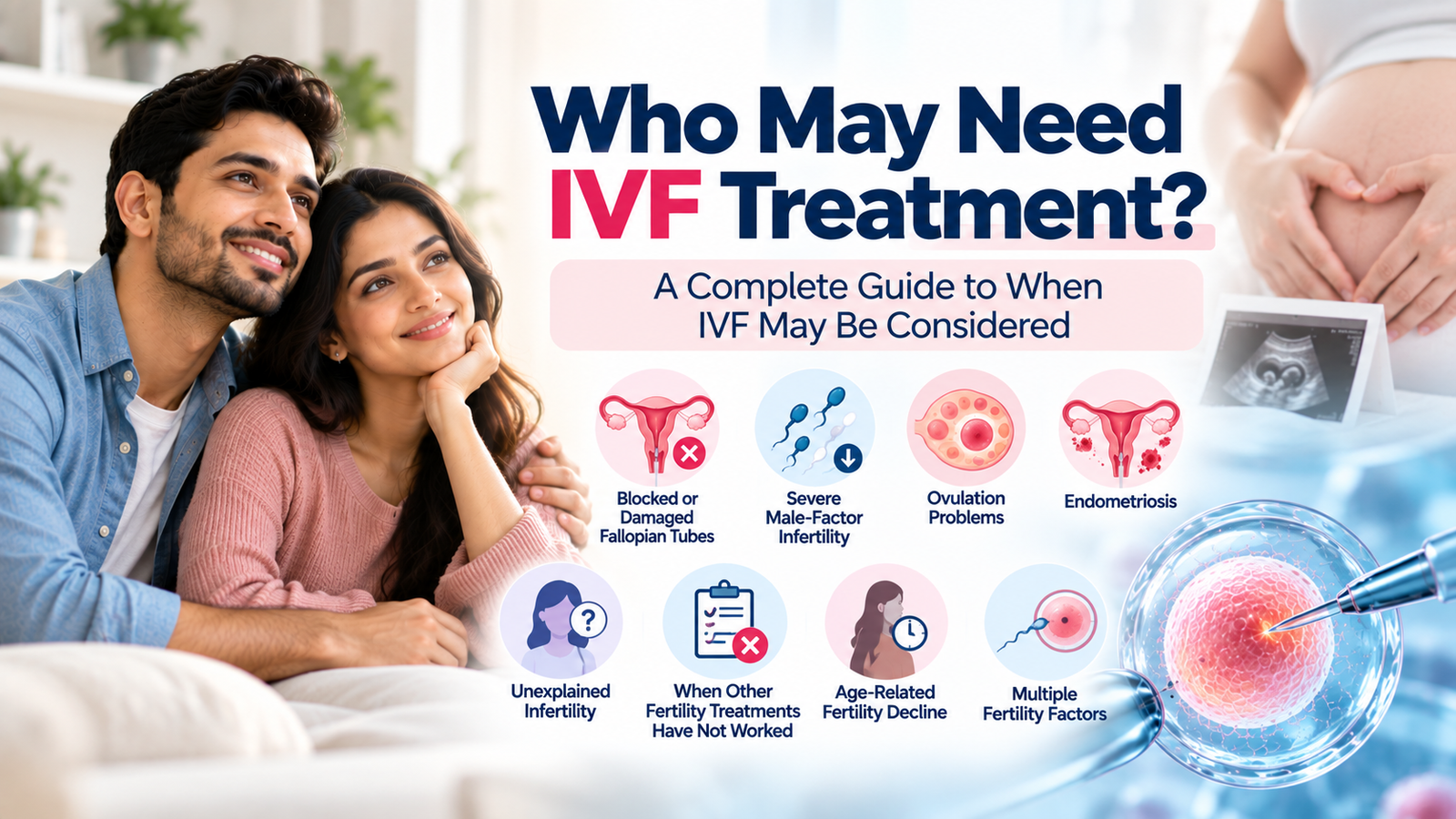
In vitro fertilization (IVF) is one of the most established forms of assisted reproductive treatment. It involves retrieving eggs, fertilizing them with sperm in a laboratory, developing embryos, and transferring an embryo into the uterus.
What Does "Needing IVF" Actually Mean?
The phrase "need IVF" can sometimes make fertility treatment sound more definite than it really is. In practice, a fertility specialist considers several questions:
- What is causing the difficulty conceiving?
- How long have you been trying to conceive?
- What is the woman's age?
- Is ovulation occurring regularly?
- Are the fallopian tubes open and functioning appropriately?
- What does the semen analysis show?
- Is there endometriosis or another pelvic condition?
- What is the ovarian reserve?
- Have previous fertility treatments been attempted?
- Are there other medical or reproductive factors?
ASRM recommends evaluating relevant fertility factors systematically and, when a male partner is contributing sperm, evaluating both partners in parallel. Therefore, IVF is a treatment option — not a diagnosis in itself.
1. IVF May Be Considered for Blocked or Damaged Fallopian Tubes
Fallopian tubes are important for natural conception because they provide the pathway where the egg and sperm can meet. Tubal problems can occur because of conditions or events such as:
- Previous pelvic infection
- Pelvic inflammatory disease
- Previous abdominal or pelvic surgery
- Previous ectopic pregnancy
- Endometriosis
- Other tubal damage or obstruction
When both fallopian tubes are significantly blocked or damaged, natural fertilization may be difficult or impossible.
How does IVF help with blocked tubes?
IVF can bypass the fallopian tubes. During IVF, eggs are retrieved from the ovaries and fertilized in a laboratory. Once an embryo has developed, it can be transferred directly into the uterus. This means that the sperm and egg do not need to meet inside the fallopian tube.
However, not every person with a tubal problem automatically needs IVF. The type and location of the blockage, age, ovarian reserve, sperm factors and previous fertility history all matter.
Tubal evaluation may involve tests such as HSG or hysterosalpingo-contrast ultrasonography in appropriate patients. NICE's 2026 guidance recommends HSG for screening for tubal occlusion in people without certain comorbidities, with HyCoSy as an alternative where appropriate expertise is available.
2. IVF May Be Considered for Male-Factor Infertility
Infertility can result from male factors, female factors, a combination of both, or sometimes no identifiable cause. Male-factor infertility can involve problems with:
- Sperm concentration
- Sperm movement
- Sperm morphology
- Sperm production
- Sperm delivery
- Certain hormonal or reproductive conditions
A semen analysis is an important part of the initial fertility evaluation. If the first semen analysis is abnormal, NICE recommends a repeat confirmatory test, with timing depending on the severity of the abnormality.
Depending on the cause and severity, treatment might include medical treatment, surgery, lifestyle changes, IUI, IVF or IVF with ICSI.
IVF vs ICSI for Male Infertility
ICSI (intracytoplasmic sperm injection) is a laboratory technique in which a single sperm is injected directly into an egg. It can be considered in selected cases of significant male-factor infertility and particular IVF circumstances.
However, ICSI is not automatically required for every couple undergoing IVF. Whether conventional IVF or ICSI is appropriate depends on the clinical situation and treatment plan.
3. IVF May Be Considered for Certain Ovulation Problems
Regular ovulation is important for natural conception. Some women experience irregular or absent ovulation because of conditions such as:
- PCOS
- Certain hormonal disorders
- Hypothalamic or pituitary disorders
- Other reproductive or endocrine conditions
However, ovulation problems do not automatically mean IVF is necessary. Depending on the cause, treatment may begin with correcting an underlying condition or using medication to induce ovulation.
IVF may become an option when other approaches have not been successful, when additional fertility factors are present, or when IVF is otherwise appropriate. This is why identifying the cause of an ovulation disorder is important before choosing treatment.
4. IVF and Endometriosis
Endometriosis is a chronic condition in which tissue similar to the lining of the uterus grows outside the uterus. It can cause pelvic inflammation, pain, adhesions and infertility.
Endometriosis does not mean that IVF is automatically required. Treatment planning may consider:
- Age
- Duration of infertility
- Severity and symptoms of endometriosis
- Ovarian reserve
- Previous surgery
- Tubal status
- Male-factor fertility issues
- Previous fertility treatment
The updated NICE 2026 guideline recommends discussing fertility options for people with endometriosis based on these individual factors. Depending on the circumstances, options may include expectant management, surgery, IUI or IVF.
This is particularly important because treatment decisions for endometriosis need to balance fertility goals with ovarian reserve and the potential effects of surgery.
5. IVF May Be Considered for Unexplained Infertility
Sometimes fertility testing does not identify a clear cause of infertility. This is called unexplained infertility. A typical evaluation may show that:
- Ovulation appears to be occurring
- The reproductive anatomy does not reveal an obvious cause
- At least one fallopian tube is open where assessed
- Semen analysis does not identify a clear major abnormality
That does not mean that there is no biological reason for the difficulty conceiving. It means that routine evaluation has not identified a specific cause.
Treatment options should therefore be discussed according to age, duration of infertility, previous treatment and individual circumstances. The 2026 NICE guideline states that IVF should be offered to eligible patients with unexplained fertility problems who have not conceived after two years of regular unprotected intercourse, with or without IUI, subject to the guideline's criteria.
6. IVF May Be Considered When Other Fertility Treatments Have Not Worked
IVF may be considered after other fertility treatments have not resulted in pregnancy. Previous treatments may include ovulation induction, timed intercourse, IUI, treatment of an underlying medical condition, or surgery for selected reproductive conditions.
However, one unsuccessful treatment cycle does not automatically mean that IVF is necessary. A fertility specialist may review the previous treatment and ask:
- Was the original diagnosis correct?
- Was ovulation achieved?
- How did the ovaries respond?
- Were the fallopian tubes open?
- Were sperm parameters adequate?
- Was the treatment completed for an appropriate number of cycles?
- Are there new factors that should be investigated?
The next treatment should be based on the complete clinical picture.
7. IVF May Be Considered When Fertility Declines With Age
Age is an important factor in fertility. Female reproductive potential generally declines with increasing age, and age is an important consideration when deciding how quickly fertility evaluation and treatment should proceed. ASRM notes that more immediate evaluation and treatment may be appropriate in women over 40.
Age does not automatically mean that someone needs IVF. However, it can influence:
- The urgency of fertility evaluation
- Expected ovarian response
- Treatment planning
- The potential number and quality of eggs and embryos
- The discussion of available treatment options
A personalized assessment is therefore particularly important when age is a significant factor.
8. IVF and Reduced Ovarian Reserve
Ovarian reserve refers to the remaining pool of eggs in the ovaries. Tests such as AMH (Anti-Müllerian Hormone) and Antral Follicle Count (AFC) can provide information about expected ovarian response during assisted reproduction.
But an important distinction is necessary: AMH does not tell you simply whether you can or cannot become pregnant naturally.
NICE's 2026 guideline specifically recommends against using AMH to predict clinical pregnancy through spontaneous conception. AMH or AFC can instead be used to help predict ovarian response and support decision-making around assisted conception. Therefore, a low AMH result alone does not automatically mean that IVF is required.
9. IVF May Be Considered When Multiple Fertility Factors Are Present
Sometimes infertility is not caused by one isolated problem. For example, a couple may have:
- Reduced ovarian reserve and abnormal semen parameters
- Endometriosis and tubal damage
- Age-related fertility decline and previous unsuccessful treatment
- Ovulation problems and male-factor infertility
When multiple factors are present, the treatment pathway may be different from that used for a single fertility problem. This is another reason why both partners should be evaluated when applicable. ASRM recommends that when a male partner is contributing to the pregnancy, evaluation of both partners should begin at the same time.
Not Sure Whether IVF Applies to Your Situation?
A personalized fertility evaluation can clarify the possible causes of infertility and the treatment options available to you. Consult Dr. Dipesh Sorathiya at Khushhi IVF, Thaltej, Ahmedabad.
Book an Appointment Learn About the ClinicDoes Everyone With Infertility Need IVF?
No. IVF is one of several fertility treatment options. Depending on the cause, treatment may follow a path such as:
Evaluation → Lifestyle or medical management → Ovulation treatment → IUI → IVF
But this is not a fixed sequence for everyone. Some people may benefit from simpler treatments, while others may have a condition where IVF is considered earlier. For example:
- An ovulation disorder may initially be treated with ovulation-induction medication.
- Some couples may be candidates for IUI.
- Significant tubal disease may make IVF a more appropriate option.
- Severe male-factor infertility may require IVF with specialized laboratory treatment.
- Endometriosis may require an individualized combination of medical, surgical and assisted reproductive approaches.
The appropriate treatment depends on the individual's evaluation.
What Fertility Tests Are Usually Considered Before IVF?
Female Fertility Assessment
Depending on the clinical situation, evaluation may include:
- Menstrual and ovulation history
- Ultrasound examination
- Ovarian reserve assessment
- Assessment of the uterus
- Fallopian-tube assessment
- Relevant medical or hormonal investigations
NICE recommends using maternal age as an important initial predictor of spontaneous conception and using AMH or AFC to help predict ovarian response during assisted conception.
Male Fertility Assessment
This commonly includes medical and reproductive history, semen analysis, repeat semen analysis when an initial result is abnormal, and further evaluation when indicated. NICE recommends repeat confirmatory testing after an abnormal initial semen analysis, with earlier repeat testing when severe sperm deficiency is detected.
When Should You Consider a Fertility Evaluation?
| Situation | When to Seek Evaluation |
|---|---|
| Women under 35 | After 12 months of regular unprotected intercourse |
| Women aged 35 or older | After 6 months |
| Known fertility-related condition | A shorter interval or immediate evaluation |
| Women over 40 | More immediate evaluation and treatment may be appropriate |
ASRM states that evaluation should begin without delay when conditions known to affect fertility are present, such as suspected tubal or uterine disease, endometriosis, irregular or absent periods, or known male subfertility.
Can IVF Be the First Treatment?
Sometimes, yes — but it depends on the reason for infertility. NICE's 2026 guidance recommends offering IVF to eligible patients when there is a diagnosed cause of infertility for which other treatments are unsuitable or have not been successful. It also includes specific criteria for unexplained fertility problems and previous artificial insemination.
For some fertility conditions, however, other treatments may reasonably be considered first. Therefore, "IVF first" versus "try something else first" should be a clinical decision rather than a one-size-fits-all rule.
Does IVF Guarantee Pregnancy?
No. IVF can provide an important treatment option for infertility, but IVF cannot guarantee pregnancy or a live birth. Treatment outcomes can be influenced by factors including age, ovarian reserve, sperm factors, underlying fertility diagnosis, embryo development, uterine factors, previous treatment and individual response to ovarian stimulation.
A fertility specialist can discuss the potential benefits, limitations and alternatives based on the patient's individual circumstances.
What About IVF Add-On Treatments?
Patients researching IVF may encounter many additional tests and treatments marketed as ways to improve IVF outcomes. It is important to distinguish established treatment from procedures that may not have sufficient evidence.
For example, the 2026 NICE fertility guideline recommends not offering endometrial receptivity testing as an IVF treatment add-on, including tests such as Endometrial Receptivity Array (ERA). It also recommends against immunological treatments such as intralipids, IVIG and glucocorticoids as part of fertility treatment.
This highlights an important principle: fertility treatment should be based on the individual's clinical needs and the available evidence rather than automatically adding multiple procedures to an IVF cycle.
Frequently Asked Questions
Who may need IVF treatment?
IVF may be considered for certain cases of blocked or damaged fallopian tubes, significant male-factor infertility, some ovulation disorders, endometriosis, unexplained infertility, or when other appropriate fertility treatments have not been successful.
Do blocked fallopian tubes require IVF?
Not necessarily in every case, but when significant tubal damage or bilateral blockage prevents the egg and sperm from meeting naturally, IVF may be considered because it bypasses the fallopian tubes.
Is IVF necessary for PCOS?
Not necessarily. Many women with PCOS can conceive with appropriate ovulation treatment. IVF may be considered when other treatments are unsuccessful or when additional fertility factors are present.
Can men with infertility need IVF?
Yes. Depending on the severity and cause of male-factor infertility, IVF — sometimes combined with ICSI — may be considered.
Does endometriosis mean I need IVF?
No. Endometriosis does not automatically mean IVF is required. Treatment depends on factors such as age, duration of infertility, symptoms, disease severity, ovarian reserve and male-factor considerations.
Can unexplained infertility be treated with IVF?
Yes. IVF is one of the treatment options for unexplained infertility. Current NICE guidance includes IVF after an appropriate period of trying to conceive, subject to its eligibility criteria.
Can IVF be considered after failed IUI?
Yes. Previous unsuccessful IUI can be one factor considered when deciding whether IVF is appropriate. The number of previous cycles, age, diagnosis and other fertility factors should be reviewed.
Does low AMH mean I need IVF?
Not automatically. AMH is useful for assessing expected ovarian response during assisted conception, but it should not be used alone to determine whether someone can become pregnant naturally.
When should I see an IVF specialist?
Consider a fertility evaluation if you have been trying to conceive for 12 months if under 35, for 6 months if 35 or older, or sooner if you have a known fertility-related condition, irregular periods, suspected tubal disease, endometriosis or known male-factor infertility.
Final Thoughts
Who may need IVF treatment? The answer depends on the underlying fertility situation. IVF may be considered for certain tubal problems, significant male-factor infertility, some ovulation disorders, endometriosis, unexplained infertility, age-related fertility considerations, or when other appropriate fertility treatments have not resulted in pregnancy.
However, having one of these conditions does not automatically mean IVF is the only treatment available. A comprehensive evaluation of both partners, when applicable, helps identify the factors affecting fertility and allows the available treatment options to be discussed clearly.
The goal is not simply to choose IVF because it is an advanced treatment. The goal is to identify the treatment that is appropriate for the individual's age, diagnosis, reproductive history, ovarian reserve, sperm factors and fertility goals.
About Dr. Dipesh Sorathiya
Dr. Dipesh Sorathiya is a Fertility & IVF Specialist in Ahmedabad with expertise in fertility evaluation and assisted reproductive care. His clinical areas include IVF, ICSI, IUI, male and female fertility assessment, fertility preservation and management of complex infertility.
Khushhi IVF 5th Floor, Soham Pristine, Off Sindhubhavan Road, Thaltej, Ahmedabad, Gujarat 380054, India.
